Ultrahuman Ring AIR Review (2026)
A long-term, honest review from an eleven-year Apple Watch user switching to a smart ring for the first time. Verdict: 4.5 / 5.
By Michael · Purchased with my own money, no review unit · · Get 10% off with our referral link
The short version
The Ring AIR is the first wearable in a decade that's made me take the Apple Watch off. It disappears on your finger, the battery genuinely lasts the week, the sleep data is clearly better than what the Watch was giving me, and — crucially — core tracking carries no subscription. The app is excellent, the onboarding is slick, and the scores it produces (Sleep Index, Movement Index, Recovery) are easy to act on without needing a sports science degree.
It isn't perfect. The workout tracking is deliberately minimal, you can't see notifications, and for the first week the ring on your finger feels like a novelty you're convinced you'll lose. But after a month I simply stopped noticing it, which is the highest compliment you can pay a wearable.
Verdict: 4.5 / 5. If you want clean, subscription-free health data and you're willing to give up smart-watch features, this is the ring to buy. Use our referral link for 10% off — it works at checkout automatically.
Who I am, and why that matters
I've worn an Apple Watch since Series 1 in 2015. I'm not a quantified-self fanatic — I'm a developer who wanted better sleep data without strapping something to my wrist at night. I bought the Ring AIR with my own money (via the same referral programme this site uses). No free units, no review sample, no sponsorship. Where I say something is good or bad, it's because that's what I found.
Unboxing and sizing
Order a free sizing kit first — seriously. Ring sizing is notoriously finger-dependent and the kit arrives in a few days. If you have access to a 3D printer you can print your own sizing kit at home and skip the wait entirely — it's how I found my size. Once the real ring arrives it comes in a small magnetic box with a USB-C charger the size of a coin. Setup is: scan a QR code, create an account, pair over Bluetooth — done in under five minutes.
Day-to-day wear
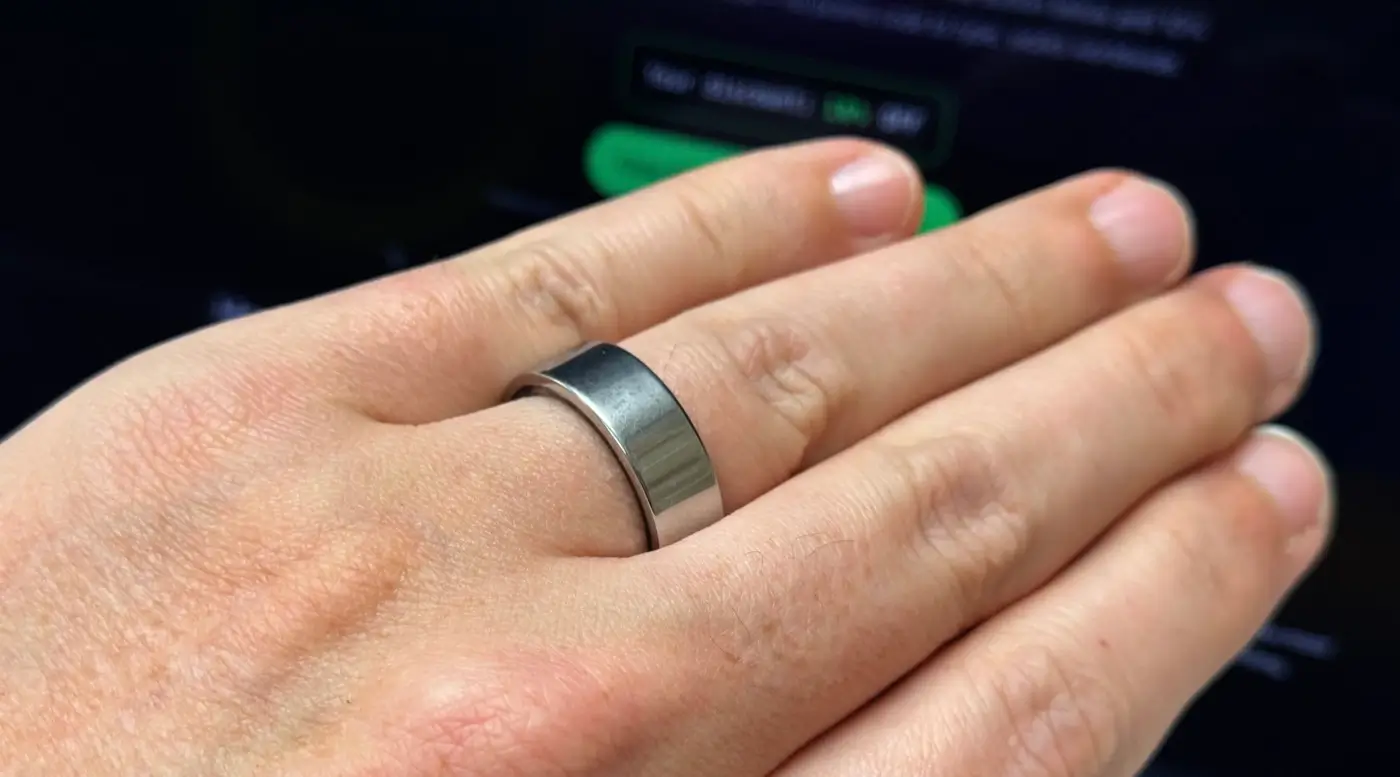
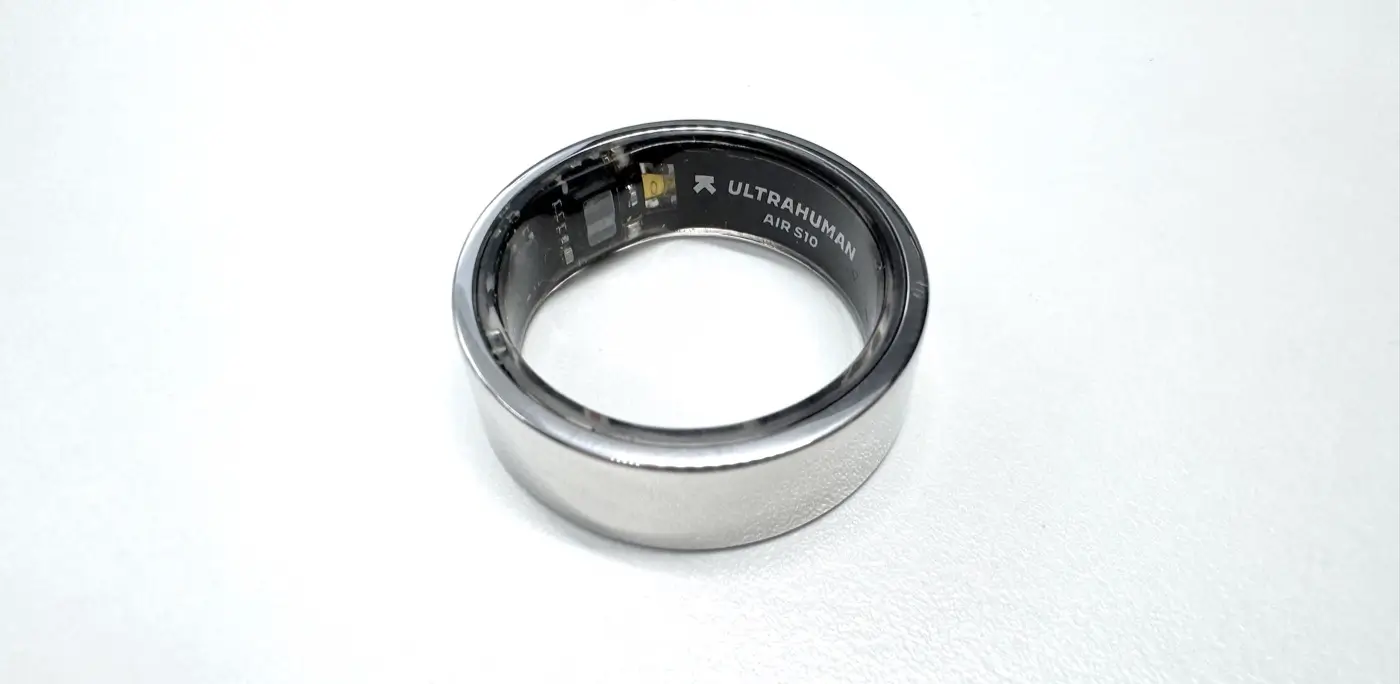
The AIR is titanium, weighs about 2.4g and feels lighter than a wedding band. I wear it on my non-dominant index finger. First two days I was convinced it'd fall off — by day five I was forgetting which finger it was on. It survives showers, washing up and the gym without complaint. The finish hasn't scratched noticeably after several months of daily use.
Battery life
Ultrahuman quote "up to six days". In real use I get 5 to 5.5 days with all sensors on. The app warns you at 20% and again at 10%. A full charge takes under two hours. Compared to the Apple Watch's nightly charge ritual, this alone is the killer feature — I simply charge it while I make coffee every few days.
Sleep tracking
This is where the Ring AIR shines and where my Apple Watch was quietly misleading me for years. The ring's sleep stage detection (awake, light, deep, REM) lines up with how I actually feel in the morning in a way the Watch never did. The Sleep Index score is a single 0–100 number you can glance at before coffee, with drill-downs into HRV, resting heart rate, skin temperature deviation and sleep debt if you want more detail.
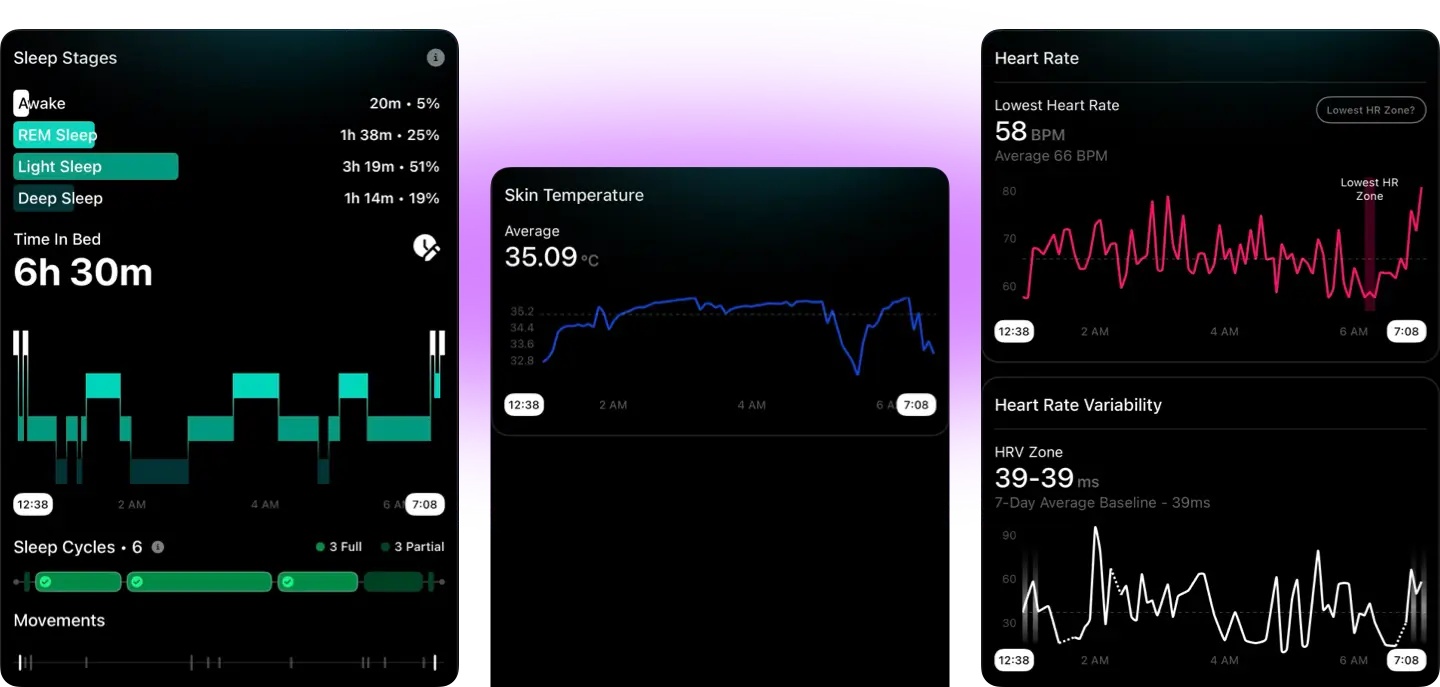
Notably, the ring picks up on patterns the Watch missed — late caffeine, alcohol, high stress days — and surfaces them in the Recovery section without being preachy about it.
The Ultrahuman app
Genuinely the best wearable app I've used. No dark patterns, and none of the core tracking is locked behind a paywall — sleep, HRV, recovery, temperature and steps are yours permanently once you've bought the ring. The Circadian Rhythm view is my favourite addition; it learns your schedule and nudges you about caffeine cut-offs and wind-down windows. The interface is clean, fast, and clearly designed by people who actually use the product.
One correction to something I wrote in the original version of this review. I said "everything you pay for at purchase is everything you get, forever," which is no longer precisely true. Ultrahuman now sells three optional paid PowerPlugs — AFib Detection (£4.90/mo), Tesla Sync (£6.90/mo) and Cycle & Ovulation Pro (£2.99/mo). They sit alongside the core app rather than gating it, and I've never paid for one. But "no subscription, ever" isn't the right phrase any more, and I've written up exactly what's free and what isn't.
What it doesn't do
- No notifications. If you rely on wrist taps for messages and calls, you'll miss them.
- Basic workout tracking. Start/stop via the app, no automatic detection for most activities.
- No on-ring display or haptics. It's purely a sensor — all data is in the app.
- No ECG. If you need clinical-grade heart rhythm monitoring, look elsewhere.
For me that's fine: I still keep the Apple Watch available for GPS runs. For some buyers these will be dealbreakers — know before you order.
Ring AIR vs Oura Ring 4
The single biggest reason to pick the Ring AIR over Oura is still the subscription. Oura's membership is required to see most of the insights you paid hundreds of pounds for: $5.99/month or $69.99/year, though a new Ring 4 does include the first 12 months free. Ultrahuman charges nothing for equivalent core tracking. Over three years that's roughly $140 of difference before you've compared a single data point.
The hardware quality is genuinely close; the business model is not. I've laid out the full picture — including the Ultrahuman add-ons that do cost money — on our subscription breakdown page. If you're deciding between the two Ultrahuman rings rather than against Oura, see Ring AIR vs Ring PRO.
Should you buy the Ultrahuman Ring AIR?
Yes, with caveats. Buy it if you want honest sleep data, multi-day battery and zero subscription fatigue. Skip it if you need wrist notifications, ECG, or comprehensive automatic workout tracking.
If you've decided to buy, use our referral link — it gives you 10% off at checkout, applied automatically. No promo code or voucher code needed.